Start With a Clear Problem, Not a Feature List
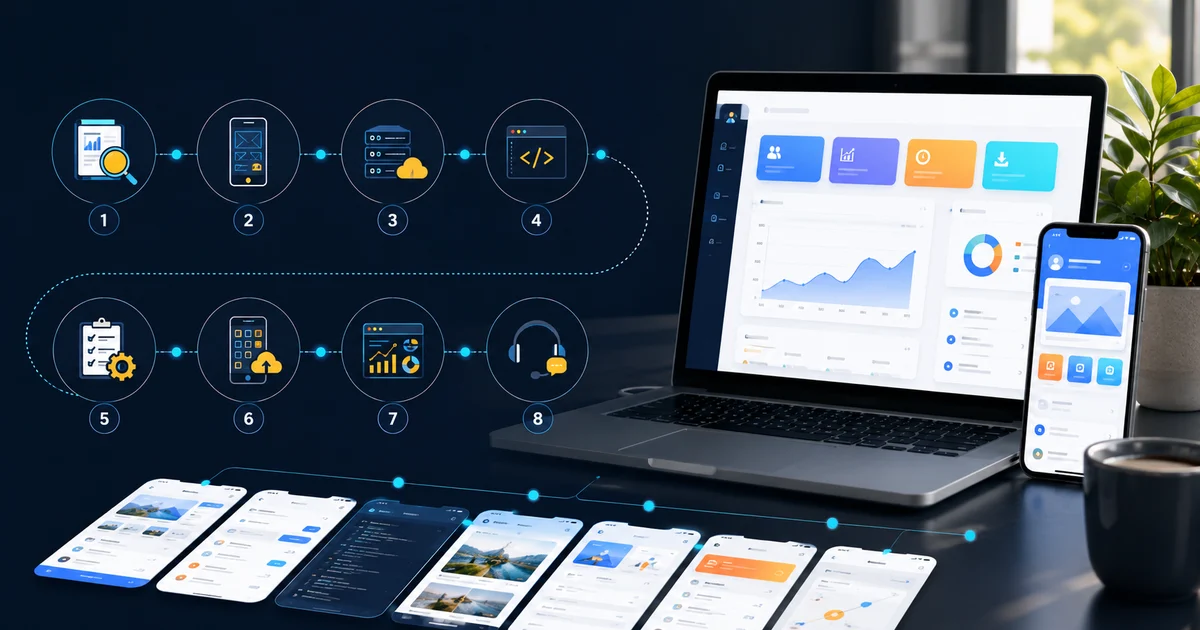
Define the one core problem your app solves and the target user who feels it most. Write a one-line description before you build: “This app helps [person] do [job] without [friction].”
Feature bloat kills more apps than bad code. Validate the idea with interviews, a clickable prototype, or a landing page before writing a single line of code. Your first version should prove the core loop, not demonstrate everything the product might become.
Planning and Discovery
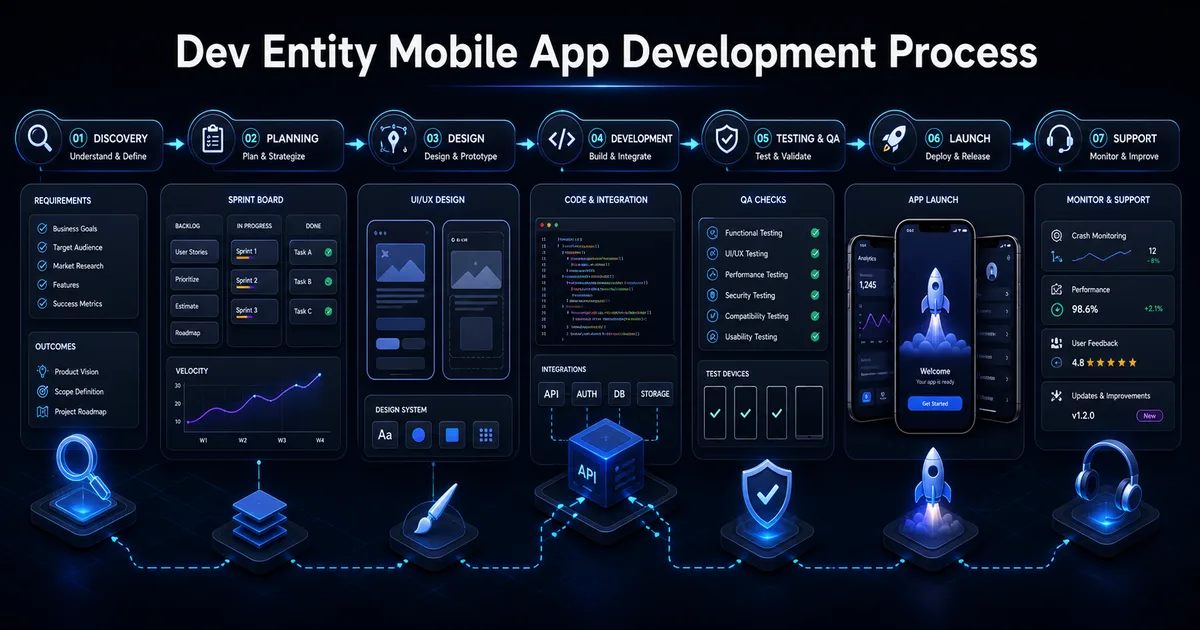
Skipping discovery is one of the most expensive mistakes in app development. Define user journeys first, then wireframes, then visual design, and only then development. That sequence exposes wrong assumptions while they are still cheap to change.
Dev Entity runs discovery sessions around users, workflows, integrations, acceptance criteria, and the first release. A fixed scope gives you a fixed price and fewer surprises. For a startup, our Software Development For Startups process keeps the first milestone focused.
Choose the Right Tech Stack for Your App
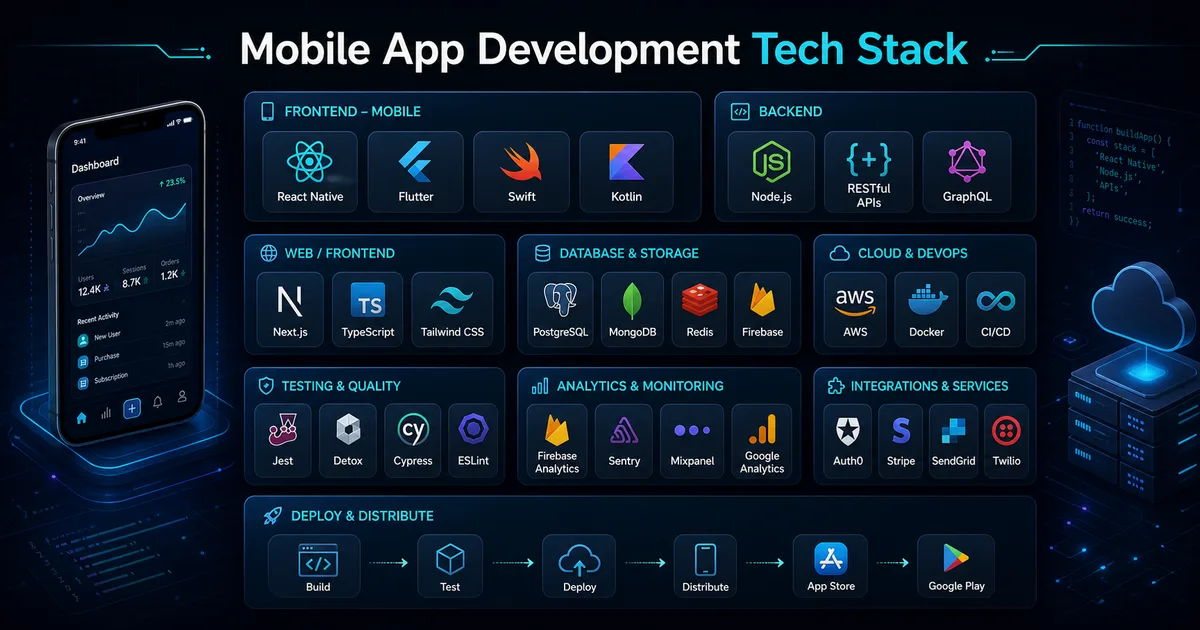
React Native or Flutter is the sensible choice for most cross-platform products because one codebase covers iOS and Android. Use native Swift or Kotlin when deep hardware integration or platform-specific performance genuinely requires it.
Node.js works well for backend APIs. Choose Firebase for straightforward data and rapid iteration, or PostgreSQL when your product needs complex relational data and reporting. Do not over-engineer version one; scale the architecture as the product earns that complexity.
Build an MVP First — Not the Full Product
An MVP means minimum viable product, not minimum viable features. Ship the core loop first: the one thing your app must do well enough that real users can judge its value.
Get feedback before adding secondary features. Most successful apps started much simpler than the products people know today, and Dev Entity recommends phased development for every new product so you can learn before committing the next budget.
If your app coordinates customers, providers, or field teams, review our On Demand App Development service for a practical first-release scope.
Test Early, Test Often — QA Is Not Optional
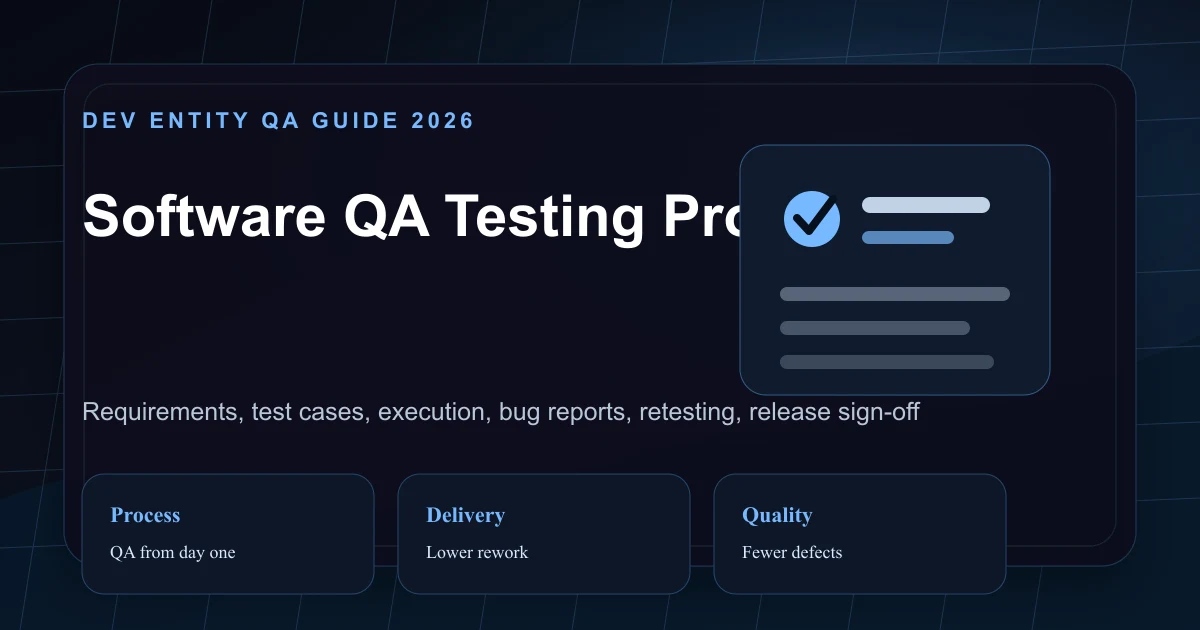
Use unit tests for isolated logic, integration tests for connected services, and user acceptance testing for the workflows that matter to customers. Test on real devices, not only simulators, and run a beta with real users before App Store submission.
Without proper QA, bugs hide in permissions, offline states, push notifications, payments, small screens, and slow connections. QA is included in every Dev Entity project because a polished launch is part of the product, not an optional extra.
Why Build With Dev Entity?
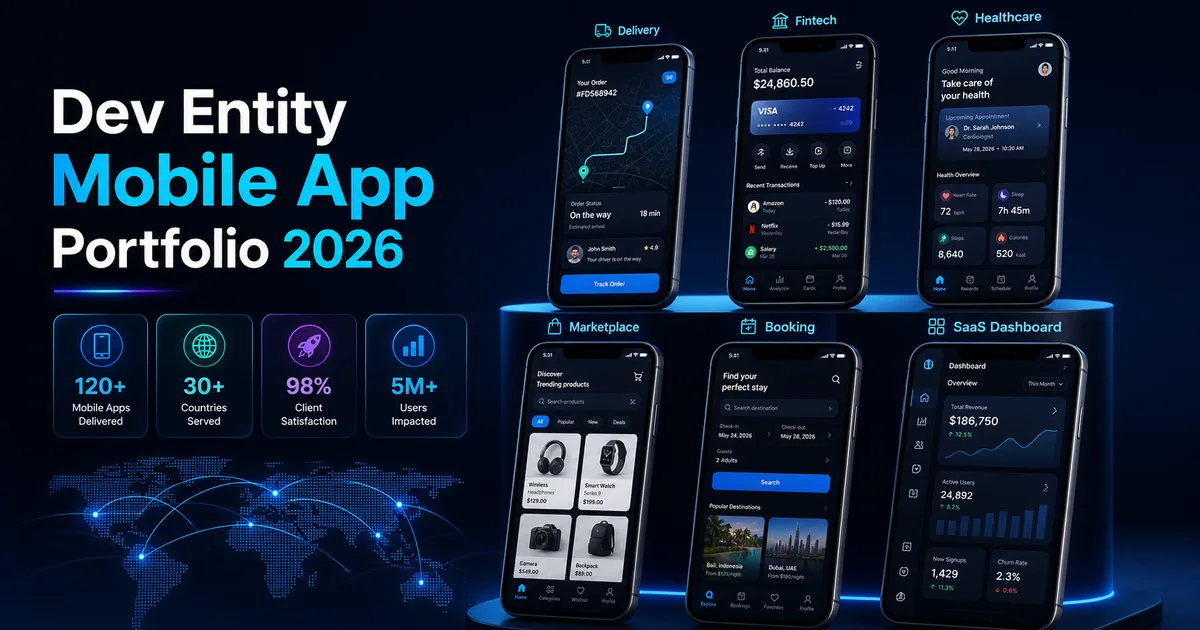
Dev Entity is a UK-based company founded in 2020 with 15+ engineers and 120+ projects delivered for clients in the USA, UK, UAE, Saudi Arabia, and Germany. The team handles discovery, design, development, QA, launch, and post-launch support end to end.
Projects start from $3,500 with fixed pricing. You keep full IP ownership and source code, work under NDA protection, and see working features every two weeks through agile sprints. Explore Custom Mobile App Development or visit Dev Entity to start with a clear first milestone.
Frequently Asked Questions
What are the most important tips for building a great app in 2026?
Start by defining the one problem your app solves — not a list of features. Validate the idea before building. Plan user journeys before wireframes. Choose the right tech stack for your needs. Build an MVP first and get real user feedback. Test on real devices before launch. These steps save most founders months of wasted development.
How do I choose the right tech stack for my app?
For most business apps in 2026, React Native or Flutter covers both iOS and Android from one codebase at 30-40% lower cost than native. Use Node.js for your backend. Choose Firebase for simple data needs and PostgreSQL for complex relational data. Do not over-engineer for version one — start lean and scale the tech as you scale the product.
What is an MVP and why should I build one first?
An MVP is a minimum viable product — the simplest version of your app that solves the core problem for real users. Building an MVP first means you get real feedback before investing in full features. Most successful apps started as much simpler products. Dev Entity recommends phased development so you launch fast and improve based on real data.
How important is QA testing in app development?
QA testing is not optional — it is what stands between a polished product and an embarrassing launch. Test on real devices, not just simulators. Run beta testing with real users before submitting to the App Store. Most critical bugs only appear under real-world conditions. Dev Entity includes QA as a standard part of every development project.
How long does it take to build a great app from scratch?
A focused MVP takes 4 to 10 weeks. A full business app with multiple features and integrations takes 3 to 6 months. Enterprise platforms take 6 to 12 months or more. The key is not rushing — a well-planned, well-tested app launched slightly later will always outperform a rushed product full of bugs and missing features.
Why choose Dev Entity to build your app?
Dev Entity is a UK-based mobile app development company with 120+ projects delivered across USA, UK, UAE, Saudi Arabia, and Germany since 2020. The team handles everything end-to-end — discovery, design, development, QA, and launch. Projects start from $3,500 with fixed pricing, full IP ownership, NDA protection, and post-launch support included as standard.